How to Verify a Rental Property Before Paying Advance (2026 Complete Guide)
How to Verify a Rental Property Before Paying Advance (2026 Complete Guide)
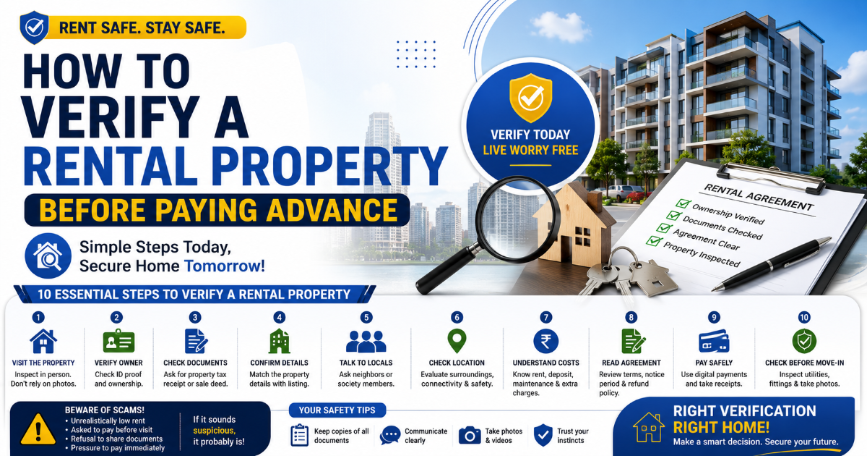
How to Verify a Rental Property Before Paying Advance
Renting a house is one of the biggest decisions you'll make, whether you're moving to a new city, relocating for work, or searching for a better neighborhood. However, one of the most common mistakes tenants make is paying an advance amount before verifying the property's authenticity.
Rental fraud has become more sophisticated, with fake property listings, unauthorized agents, and fraudulent owners targeting unsuspecting tenants. Spending a little extra time verifying the property can save you from financial loss, legal disputes, and unnecessary stress.
This guide explains how to verify a rental property before paying any advance, helping you make a safe and informed decision.
Why Property Verification Is Important
Many rental scams involve properties that:
Do not exist
Are already rented
Are listed without the owner's permission
Have ownership disputes
Are advertised using misleading photos
Require advance payment before any property visit
Verifying a property reduces these risks and gives you greater confidence before signing a rental agreement.
Step 1: Visit the Property in Person
Never rent a house based only on online photos or videos.
During your visit, check:
Overall building condition
Cleanliness
Water supply
Electricity
Ventilation
Natural lighting
Security
Parking availability
Lift (if applicable)
Mobile network coverage
Internet availability
Visiting the property also helps you compare it with the online listing.
Step 2: Verify the Property Owner's Identity
Always confirm that you're dealing with the actual owner or an authorised representative.
You can politely request:
Government-issued photo identification
Proof of ownership (such as the latest property tax receipt or sale deed details)
Society or apartment association confirmation, if applicable
If someone refuses to provide basic verification, treat it as a warning sign.
Step 3: Match the Property Details
Compare the actual property with the advertisement.
Check:
Address
Number of bedrooms
Furnishing
Parking
Amenities
Balcony
Floor number
Monthly rent
Maintenance charges
If the information differs significantly from the listing, ask for clarification before proceeding.
Step 4: Ask for Ownership Confirmation
If you're renting directly from the owner, ask reasonable questions such as:
Are you the registered owner?
Is the property currently occupied?
Is there any pending legal dispute affecting the property?
Are there any restrictions from the apartment association?
For apartments, you may also verify with the security desk or residents' association that the owner is authorised to rent out the property.
Step 5: Inspect the Neighbourhood
A good home is not just about the apartment—it's also about the surrounding area.
Check nearby:
Grocery stores
Public transport
Metro stations
Schools
Hospitals
Pharmacies
Banks
Parks
Restaurants
Daily convenience stores
Visit during both daytime and evening if possible to understand traffic, noise, and safety.
Step 6: Understand All Costs
Before paying any money, ask for a clear breakdown of:
Monthly rent
Security deposit
Maintenance charges
Parking charges
Utility payments
Society fees (if applicable)
Clarify whether maintenance is included in the rent or charged separately.
Step 7: Read the Rental Agreement Carefully
A written rental agreement protects both the tenant and the landlord.
Review important clauses such as:
Monthly rent
Security deposit
Payment due date
Lock-in period
Notice period
Maintenance responsibilities
Repair responsibilities
Refund conditions
Renewal terms
Do not sign documents you haven't read or understood.
Step 8: Avoid Paying Cash Without Documentation
Whenever possible:
Use bank transfer, UPI, or another traceable payment method.
Request a written receipt for any advance or security deposit.
Keep records of all payment confirmations and communication.
This creates a clear payment trail if any dispute arises.
Step 9: Watch for Common Rental Scam Warning Signs
Be cautious if:
The rent seems unrealistically low.
You're pressured to pay immediately.
The owner refuses a property visit.
The listing contains very limited information.
The contact person avoids answering basic questions.
You're asked to transfer money before seeing the property.
Different people claim to represent the same property.
If something feels suspicious, it's usually better to walk away.
Step 10: Inspect the Property Before Moving In
Before taking possession:
Create a checklist of:
Wall condition
Paint quality
Doors and locks
Windows
Electrical switches
Lights and fans
Water taps
Kitchen fittings
Bathrooms
Appliances (if furnished)
Taking date-stamped photos can help document the property's condition before occupancy.
Documents You May Need as a Tenant
Property owners commonly request:
Aadhaar Card
PAN Card
Passport-size photographs
Employment ID or offer letter
Previous address details (if required)
Provide only the information necessary for the rental process and keep copies of all submitted documents.