Real Estate Trends to Watch in India (2026) | Future of Indian Property Market
Real Estate Trends to Watch in India (2026) | Future of Indian Property Market
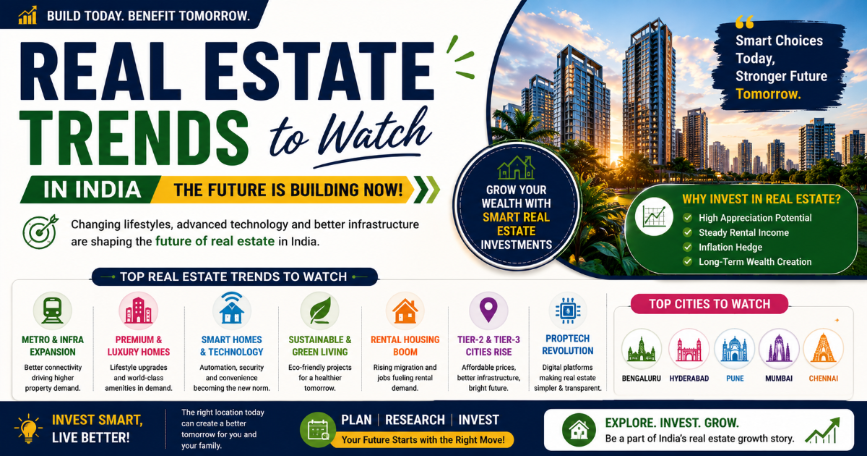
Real Estate Trends to Watch in India
India's real estate market is evolving faster than ever. Urban expansion, digital transformation, infrastructure development, and changing lifestyle preferences are reshaping how people buy, rent, and invest in property.
Whether you're a first-time homebuyer, a property investor, or someone planning to rent a home, understanding the latest real estate trends can help you make better decisions.
In this guide, we'll explore the biggest trends expected to influence India's property market and explain why they matter for buyers, sellers, landlords, and tenants.
Why India's Real Estate Market Continues to Grow
India remains one of the world's fastest-growing real estate markets due to:
Rapid urbanisation
Growing middle-class population
Expansion of IT and business hubs
Government infrastructure projects
Increasing demand for quality housing
Metro rail expansion
Growth of Tier-2 and Tier-3 cities
Rising demand for rental properties
These factors continue to create opportunities for both homeowners and investors.
Top Real Estate Trends to Watch in India
1. Metro Connectivity Is Driving Property Demand
Metro rail projects are changing the way people choose where to live.
Properties located near metro stations are becoming increasingly popular because they offer:
Faster daily commuting
Better connectivity
Lower transportation costs
Strong rental demand
Improved long-term property value
Cities such as Bengaluru, Hyderabad, Delhi NCR, Chennai, Pune, and Mumbai continue to benefit from expanding metro networks.
2. Growing Demand for Premium and Luxury Homes
Today's buyers are looking beyond basic housing. They want homes that offer comfort, convenience, and lifestyle amenities.
Popular features include:
Clubhouse
Swimming pool
Fitness centre
Landscaped gardens
Smart home technology
EV charging facilities
Co-working spaces
Children's play areas
Enhanced security
Luxury housing is no longer limited to major metropolitan cities and is expanding into emerging urban markets.
3. Smart Homes Are Becoming the New Standard
Technology is transforming modern homes.
Many new residential projects now include:
Smart lighting
Digital door locks
Video door phones
Home automation
App-controlled appliances
Smart energy management
Voice-controlled devices
These features improve convenience, safety, and energy efficiency.
4. Sustainable and Green Buildings
Environmental awareness is encouraging developers to build more sustainable communities.
Modern projects increasingly include:
Rainwater harvesting
Solar power systems
Energy-efficient lighting
Waste management systems
Green landscaping
Water-saving fixtures
Eco-friendly construction materials
Homebuyers are placing greater importance on sustainability when choosing a property.
5. Rising Demand for Rental Homes
India's rental housing market continues to expand due to:
Job relocations
IT sector growth
Student migration
Flexible work arrangements
Affordable living options
Cities with strong employment opportunities continue to experience healthy rental demand, making them attractive for investors seeking rental income.
6. Growth of Tier-2 and Tier-3 Cities
Smaller cities are becoming popular investment destinations because they offer:
Lower property prices
Better infrastructure
Improved road and rail connectivity
New employment opportunities
Educational institutions
Industrial development
This trend is creating opportunities for long-term real estate growth beyond major metropolitan areas.
7. Technology Is Simplifying Property Searches
Digital platforms have transformed the home-search experience.
Today's buyers and renters can:
Browse verified property listings
View high-quality photos and videos
Compare prices
Schedule property visits
Connect directly with owners
Complete documentation online
These innovations make property transactions more transparent and convenient.
8. Demand for Gated Communities
Many buyers now prefer gated communities because they offer:
24/7 security
Community amenities
Recreational spaces
Better maintenance
Safe environment for families
Organised parking
Clubhouse facilities
This trend continues to gain momentum across urban India.
9. Infrastructure Development Influences Property Value
Major infrastructure projects often contribute to higher demand for nearby properties.
Examples include:
Metro rail corridors
Ring roads
Expressways
Airports
IT parks
Business districts
Industrial corridors
Improved connectivity can make an area more attractive to residents and businesses alike.
10. Increasing Interest in Real Estate Investment
Many people view real estate as a long-term investment that can provide:
Potential capital appreciation
Rental income
Portfolio diversification
Tangible asset ownership
Investors increasingly evaluate location, connectivity, rental demand, and future development before making purchasing decisions.
What Homebuyers Should Consider
Before purchasing a property, consider:
Budget
Location
Metro connectivity
Builder reputation
Legal approvals
Nearby schools
Healthcare facilities
Employment hubs
Maintenance costs
Future infrastructure plans
Careful research helps reduce risks and supports informed decision-making.
Popular Investment Cities in India
Several cities continue to attract strong real estate interest due to employment opportunities and infrastructure development.
Bengaluru
Known for its technology industry, metro expansion, and strong rental demand.
Hyderabad
Offers growing IT corridors and modern residential developments.
Pune
Popular among professionals and students with steady housing demand.
Chennai
Provides established infrastructure and a diverse property market.
Mumbai Metropolitan Region
Remains one of India's largest residential and commercial property markets.
Benefits of Investing in Real Estate
Potential long-term appreciation
Rental income opportunities
Inflation hedge
Tangible ownership
Portfolio diversification
Demand driven by urban growth
Wealth creation over time
Common Mistakes to Avoid
Buying without market research
Ignoring legal verification
Choosing location based only on price
Overlooking maintenance costs
Not checking infrastructure plans
Rushing investment decisions
Ignoring rental demand
Final Thoughts
India's real estate market continues to evolve alongside changing lifestyles, technology, and infrastructure. Trends such as metro connectivity, smart homes, sustainable communities, premium housing, and digital property platforms are reshaping the way people buy, rent, and invest.
Whether you're purchasing your first home or building a long-term investment portfolio, understanding these trends can help you make more informed decisions. Focus on location quality, future infrastructure, legal clarity, and your own financial objectives rather than short-term market excitement.